Hide treatment
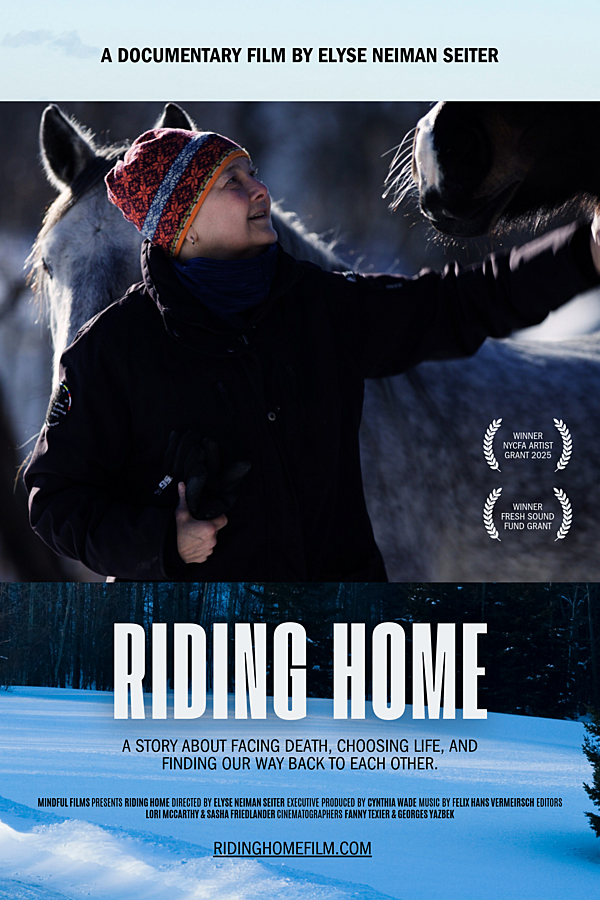
Caryl has terminal cancer. She also has horses to feed, places to go, people to love, and absolutely no interest in making dying her full-time job.
A horse trainer in rural Vermont, Caryl meets her diagnosis with determination, dark humor, and a willingness to talk about the one thing most of us would rather not bring up at dinner: death. She wants to be honest with her children about what lies ahead. Not someday. Now. Because if there’s one thing Caryl doesn’t have time for, it’s pretending she has all the time in the world.
But talking about death isn’t simple in a family that knows what sudden loss can do. Years earlier, Caryl’s sister Christie died by suicide. Caryl and her husband, Jim, adopted Christie’s adult children, bringing a family together in the aftermath of a devastating rupture. That history lingers. Now Caryl is facing her own death, and she wants to do things differently. No euphemisms. No elaborate dance around the obvious. Just the truth, however uncomfortable it might be. Whether her family is ready for that truth is another question.
In Caryl’s world, life doesn’t politely pause for a terminal diagnosis. There are horses to tend, family tensions to navigate, hard conversations to stumble through, and moments of unexpected laughter. Her body may be imposing new limits, but her personality hasn’t gotten the memo. The film settles into the rhythms of everyday life, where the biggest questions about mortality often emerge in the middle of something entirely ordinary.
Then Caryl decides to travel to California to say goodbye to her elderly parents. It’s an ambitious trip for someone whose health is declining, and there are no guarantees she’ll make it home alive. But waiting for the perfect moment has never been much of a plan. The journey becomes a gamble with time, a chance to say what needs saying while she still can, and a reminder that the desire to live doesn’t disappear just because you know how your story might end.
Filmed in an intimate, observational style, Riding Home stays close to Caryl and the people who love her. Being open about death allows Caryl to be funny, vulnerable, determined, messy, and gloriously human. There are no tidy lessons here, just a family trying to figure out how to love one another through something none of them can fix.
At its heart, "Riding Home" asks a deceptively simple question: When does protecting someone you love become holding them back? Caryl wants to speak openly about death, but honesty can unsettle the people who need it most. She wants to keep living on her own terms, but love has a way of turning concern into caution and fear into a very persuasive argument for staying home.
Ultimately, Riding Home is a film about the conversations we put off, the losses we carry, the people we want to reach before time runs out-- and the stubborn, sometimes funny, often messy business of being alive right up to the end.